How to Do an Incline Dumbbell Press
The incline dumbbell press is a chest press on a bench set at an upward angle. The incline puts more of the work on your upper chest and the front of your shoulders.
- Muscles worked
- Upper chest, front shoulders, triceps
- Equipment
- Two dumbbells and an adjustable bench
- Level
- Intermediate
- Start with
- 2–3 sets of 8–12 reps
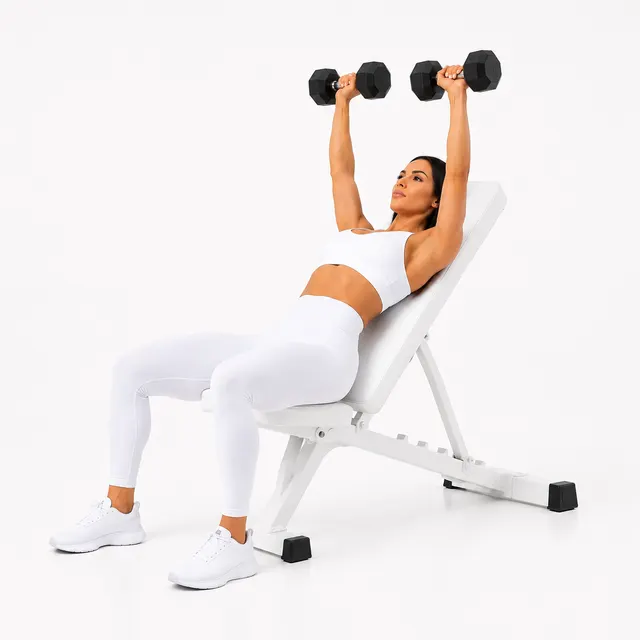
How to do an incline dumbbell press
- Set an adjustable bench to a low incline, around 30 degrees.
- Sit back with a dumbbell on each thigh, then lie back and bring the weights to the sides of your chest.
- Plant your feet, and pull your shoulder blades slightly back and down.
- Press the dumbbells up until your arms are straight above your upper chest.
- Lower them slowly until your elbows are just below the bench line, then press again.
Form tips
- Keep your elbows at about 45 degrees from your body, not flared straight out.
- Keep your wrists straight and stacked over your elbows.
- A steeper bench shifts more work to your shoulders; a lower one keeps it on your chest.
Common mistakes
- Bench too steep. Above about 45 degrees it becomes more of a shoulder press.
- Bouncing at the bottom. Lower with control and pause briefly.
- Lifting your hips. Keep your glutes on the bench.
Easier and harder versions
- Easier: use lighter dumbbells or a lower incline.
- Harder: lower over three seconds, pause at the bottom, or press one arm at a time.
No bench?
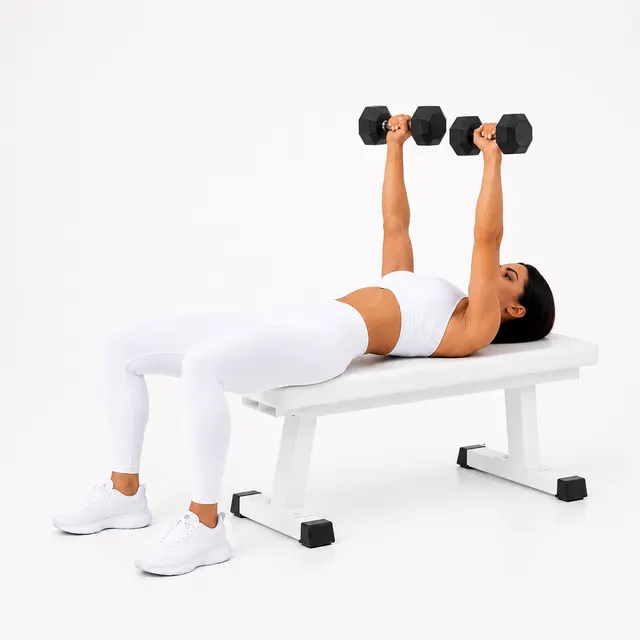
Do a dumbbell floor press instead. You’ll lose the incline angle, but you’ll still train your chest, shoulders and triceps. Our dumbbell workout without a bench is built around it.
Incline dumbbell press FAQs
What angle should the bench be?
A low incline of about 30 degrees is a common choice. Go higher and your shoulders take over more of the work.
What muscles does the incline dumbbell press work?
Mainly your upper chest, the front of your shoulders and your triceps.
Can I do it without an adjustable bench?
Not as written. Without a bench, the floor press is the closest home option for your chest.
A note on safety: this article is general fitness information, not medical advice. If you have an injury or a medical condition, are pregnant, or haven't exercised in a long time, speak to a doctor or a qualified professional before starting a new program. Stop any exercise that causes pain.