How to Do a One-Arm Dumbbell Row
The one-arm dumbbell row pulls a dumbbell from a hanging arm up toward your hip. Your free hand rests on a bench, a sturdy chair or your thigh, so it works well at home.
- Muscles worked
- Lats, upper back, rear shoulders, biceps
- Equipment
- One dumbbell; a bench, chair or your thigh for support
- Level
- Beginner
- Start with
- 2–3 sets of 8–12 reps per side
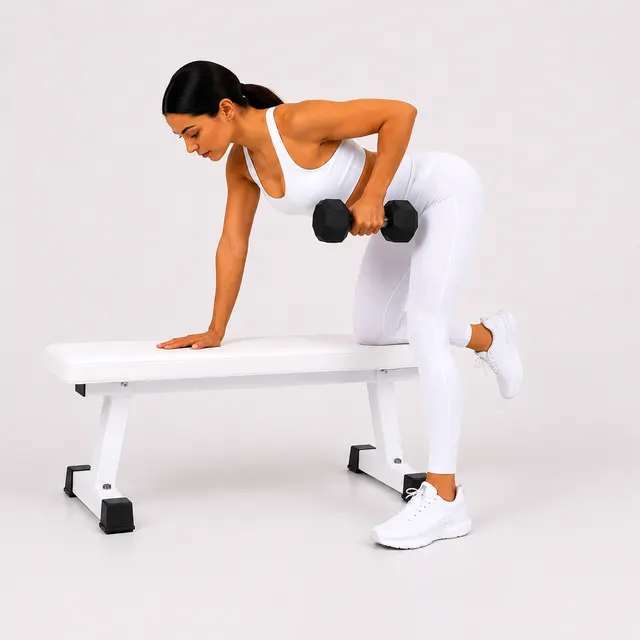
How to do a one-arm dumbbell row
- Place one hand on a bench, a sturdy chair or your front thigh, and lean forward with a flat back.
- Hold a dumbbell in the other hand with your arm hanging straight down.
- Pull the dumbbell toward your hip, leading with your elbow.
- Squeeze your shoulder blade toward your spine at the top.
- Lower the weight slowly until your arm is straight again. Finish your reps, then switch sides.
Form tips
- Pull toward your hip rather than straight up to your chest.
- Keep your shoulders level and your torso still.
- Let your arm hang fully at the bottom of each rep.
Common mistakes
- Twisting your torso. Use a lighter dumbbell and keep both shoulders facing the floor.
- Shrugging. Keep your shoulder down, away from your ear.
- Rounding your back. Hinge from your hips and keep your chest long.
Easier and harder versions
- Easier: use a lighter dumbbell and support more of your weight on the chair or bench.
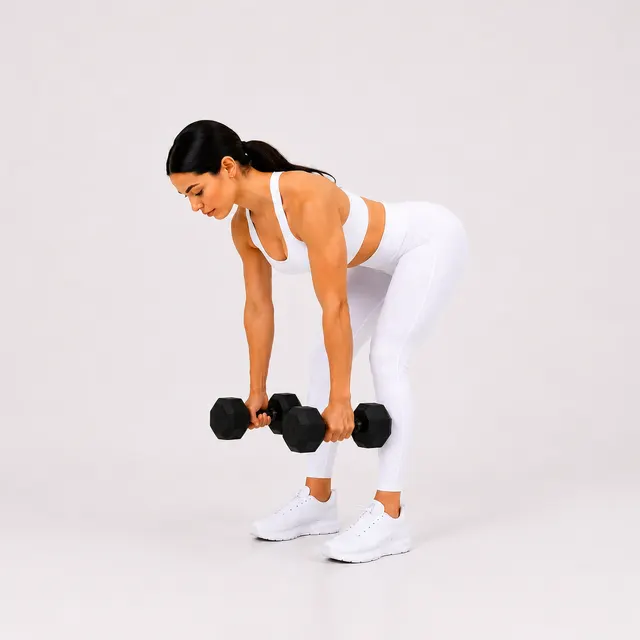
- Harder: pause at the top, lower over three seconds, or do a bent-over row with both arms.
Workouts that use the dumbbell row
- Dumbbell back and biceps workout
- Upper-body dumbbell workout at home
- Full-body dumbbell workout at home
- Dumbbell workout without a bench
One-arm dumbbell row FAQs
What muscles does the dumbbell row work?
Mainly your lats and upper back, with your rear shoulders and biceps helping.
Do I need a bench?
No. A sturdy chair works, or brace your free hand on your front thigh in a split stance.
Why one arm at a time?
Supporting yourself with one hand protects your lower back and lets you focus on each side of your back.
A note on safety: this article is general fitness information, not medical advice. If you have an injury or a medical condition, are pregnant, or haven't exercised in a long time, speak to a doctor or a qualified professional before starting a new program. Stop any exercise that causes pain.