How to Do a Dumbbell Pullover
The dumbbell pullover moves one dumbbell in an arc from above your chest to behind your head and back. It trains your lats and chest together, and you can do it on the floor.
- Muscles worked
- Lats, chest, triceps (long head), core
- Equipment
- One dumbbell; a flat bench or the floor
- Level
- Intermediate
- Start with
- 2–3 sets of 10–12 reps
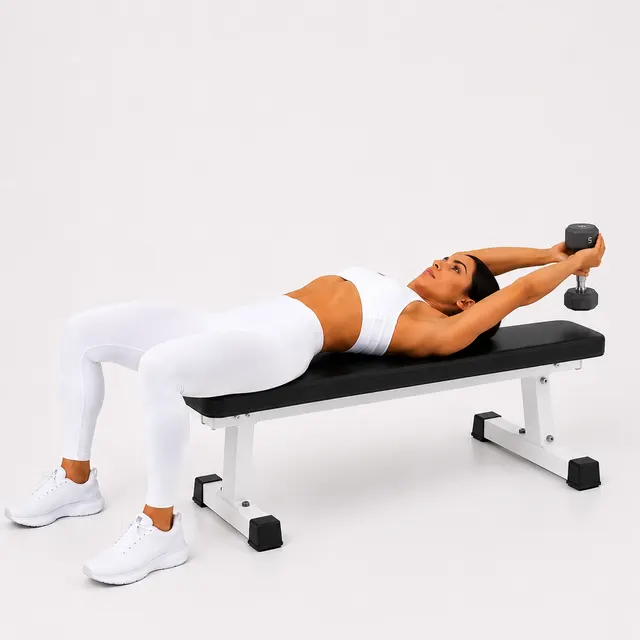
How to do a dumbbell pullover
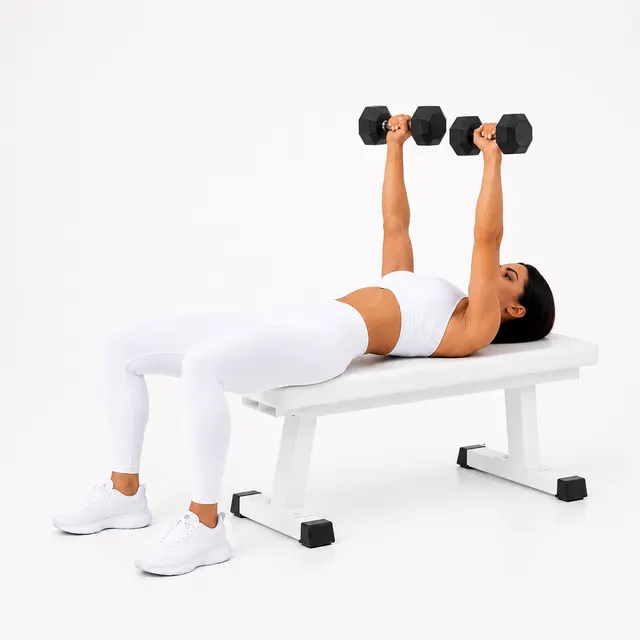
- Lie on a flat bench, or on the floor with your knees bent.
- Hold one dumbbell with both hands above your chest, arms almost straight.
- Keeping a slight bend in your elbows, lower the dumbbell in an arc behind your head.
- Stop when you feel a stretch along your sides, or when the dumbbell nears the floor.
- Pull it back along the same arc to above your chest.
Form tips
- Keep the same small bend in your elbows the whole time.
- Keep your ribs down and your lower back in contact with the bench or floor.
- Move slowly; the stretch at the bottom is the important part.
Common mistakes
- Bending the elbows more and more. That turns it into a triceps extension. Lock in the angle.
- Arching your back to go deeper. Shorten the range instead.
- Going too heavy. A moderate dumbbell you can control is enough.
Easier and harder versions
- Easier: do it on the floor so the floor limits the range, and use a light dumbbell.
- Harder: lower over three seconds and pause in the stretch.
No bench?
Lie on the floor with your knees bent. The floor stops the dumbbell at a safe depth, which makes it a good way to learn the move.
Dumbbell pullover FAQs
Does the pullover work the back or the chest?
Both. Your lats and chest share the work, which is why it shows up on back days and chest days.
How heavy should the dumbbell be?
Lighter than you’d use for presses. Choose a weight you can lower slowly without your back arching.
Can I do it on the floor?
Yes. The floor version has a shorter range, which many people find easier to control.
A note on safety: this article is general fitness information, not medical advice. If you have an injury or a medical condition, are pregnant, or haven't exercised in a long time, speak to a doctor or a qualified professional before starting a new program. Stop any exercise that causes pain.