How to Do a Dumbbell Shoulder Press
The dumbbell shoulder press, also called the overhead press, pushes two dumbbells from your shoulders to straight arms overhead. You can do it standing, with no bench needed.
- Muscles worked
- Shoulders, triceps, upper chest, core
- Equipment
- Two dumbbells
- Level
- Beginner to intermediate
- Start with
- 2–3 sets of 8–12 reps
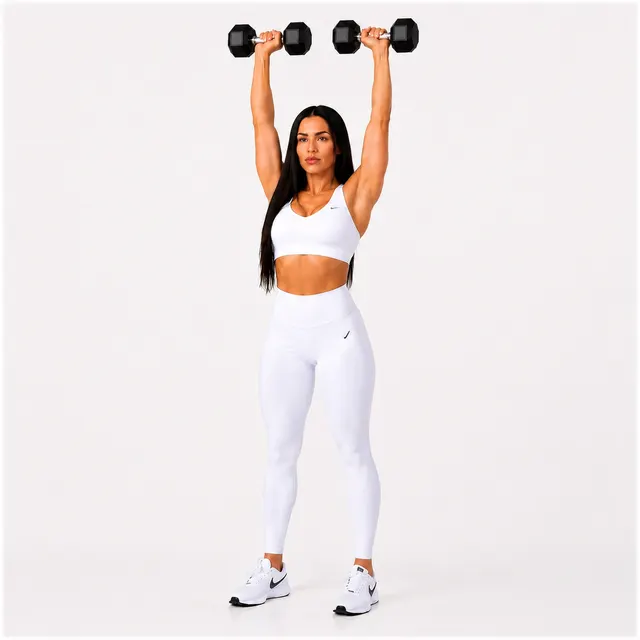
How to do a dumbbell shoulder press
- Stand with your feet about hip-width apart and hold a dumbbell in each hand at shoulder height.
- Turn your palms forward, or slightly toward each other if that feels better for your shoulders.
- Brace your core and squeeze your glutes so your lower back stays neutral.
- Press the dumbbells up until your arms are straight overhead.
- Lower them back to shoulder height with control.
Form tips
- Keep your ribs down; don’t lean back to push the weight up.
- Press in a slight arc so the dumbbells finish above your head, not in front of it.
- Keep your wrists stacked over your elbows.
Common mistakes
- Arching the lower back. Use a lighter pair and tighten your core and glutes.
- Stopping halfway. Lower the weights all the way to shoulder height on every rep.
- Using leg drive without meaning to. Keep your knees still unless you’re doing a push press on purpose.
Easier and harder versions
- Easier: press one dumbbell at a time, sit on a sturdy chair, or use lighter weights.
- Harder: pause at the top, lower over three seconds, or press from a half-kneeling position.
Workouts that use the shoulder press
- Full-body dumbbell workout at home
- Upper-body dumbbell workout at home
- Dumbbell workout without a bench
- Dumbbell chest, shoulder and triceps workout
Dumbbell shoulder press FAQs
What muscles does the dumbbell shoulder press work?
Mainly the front and side of your shoulders and your triceps, with your upper chest and core helping.
Standing or seated?
Both work. Standing asks more of your core and needs no equipment. Seated with back support lets you focus on your shoulders.
Should my palms face forward or in?
Either is fine. Many people find a neutral or slightly turned-in grip more comfortable for their shoulders.
A note on safety: this article is general fitness information, not medical advice. If you have an injury or a medical condition, are pregnant, or haven't exercised in a long time, speak to a doctor or a qualified professional before starting a new program. Stop any exercise that causes pain.